How We Produced 3 mm Floating Fish Feed Through Extrusion with excellent pigmentation for fish— A Practical R&D Story
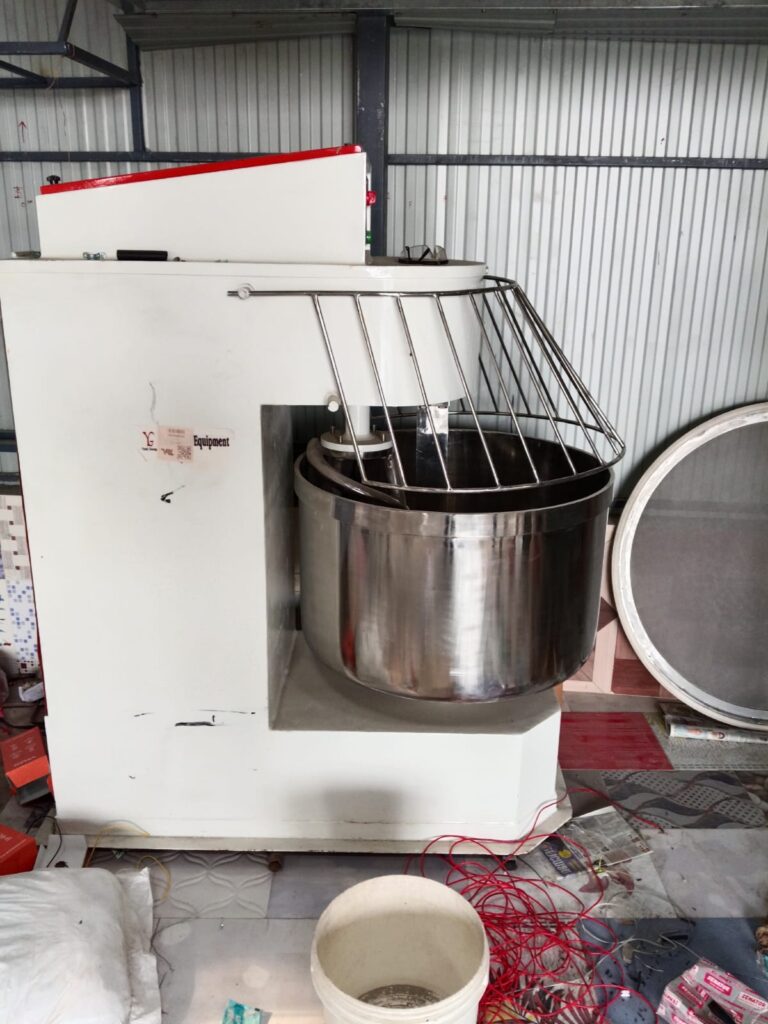
Producing a perfectly floating fish feed pellet using twin-screw extruder may look simple from the outside — but in reality, it requires careful control of density, moisture, temperature, and mechanical energy inside the extruder.
This is the story of how we successfully produced 3 mm floating fish feed with excellent pigmentation, after several trials and process adjustments.
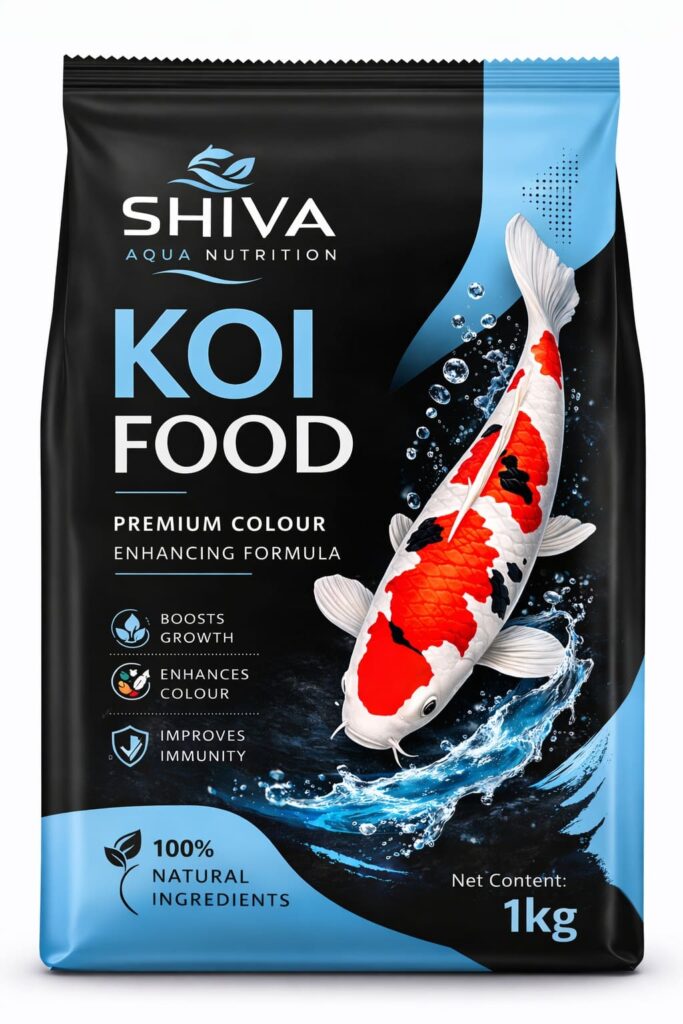
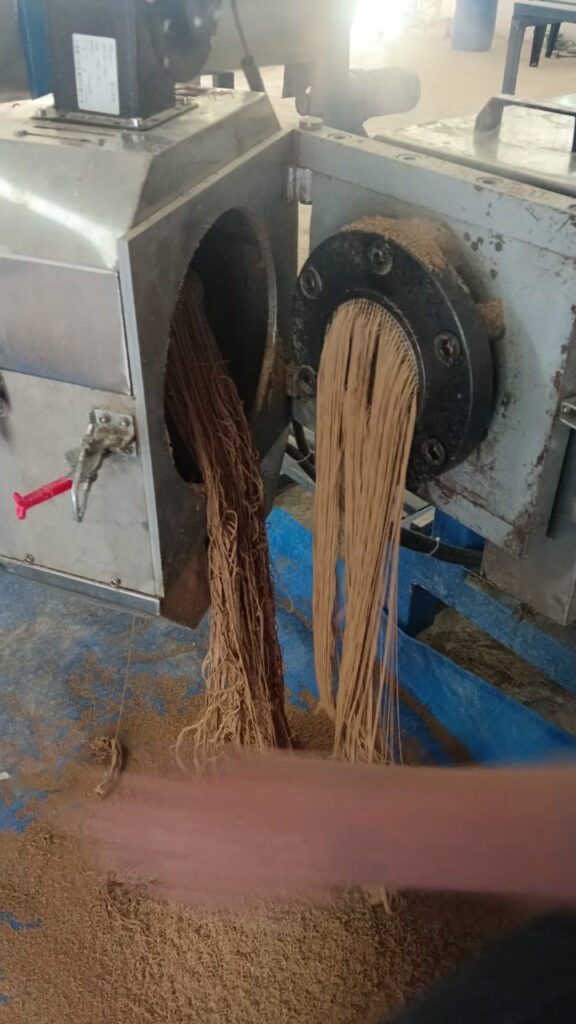
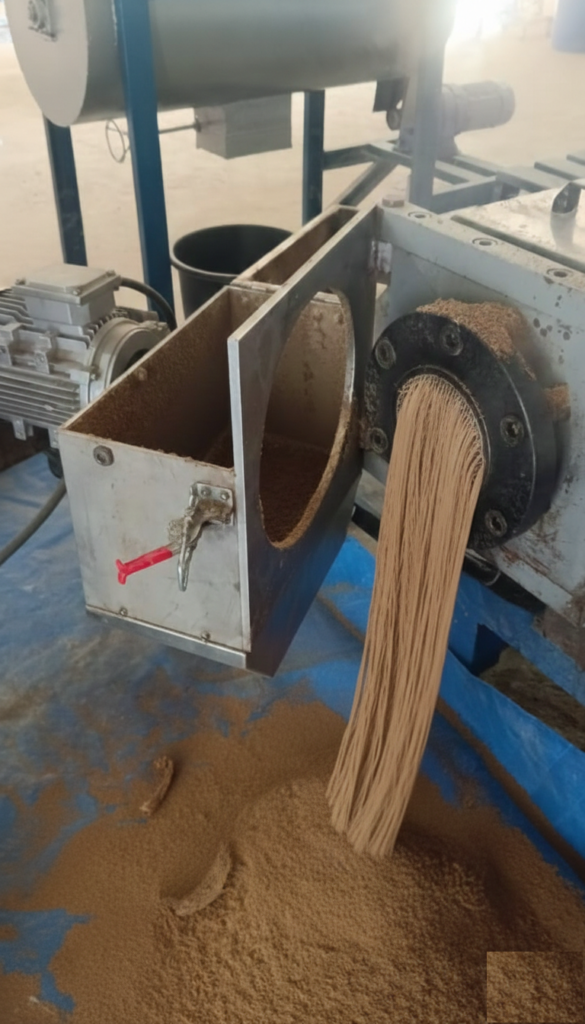
Twin Screw Extruder
1️⃣ The Initial Challenge
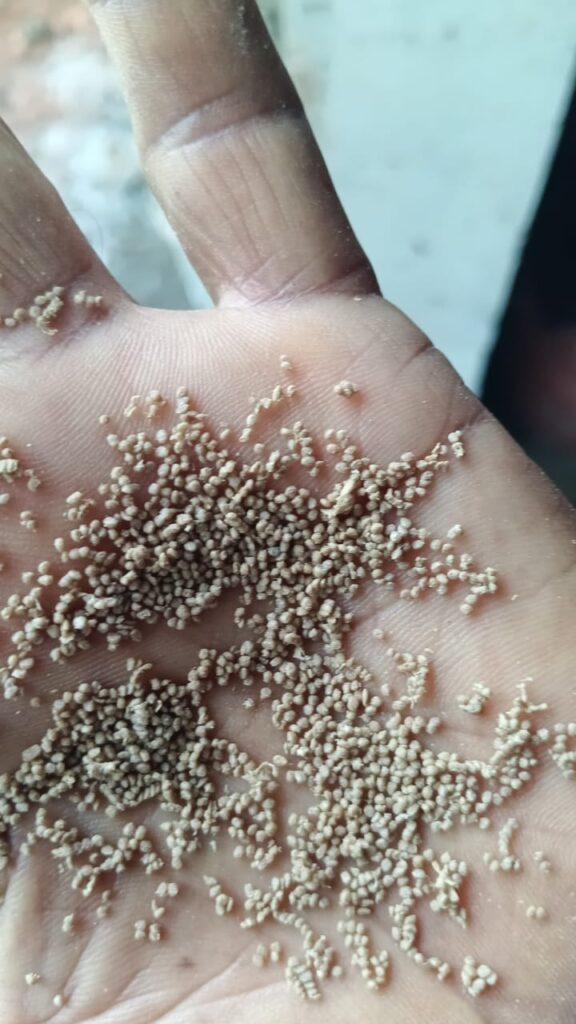
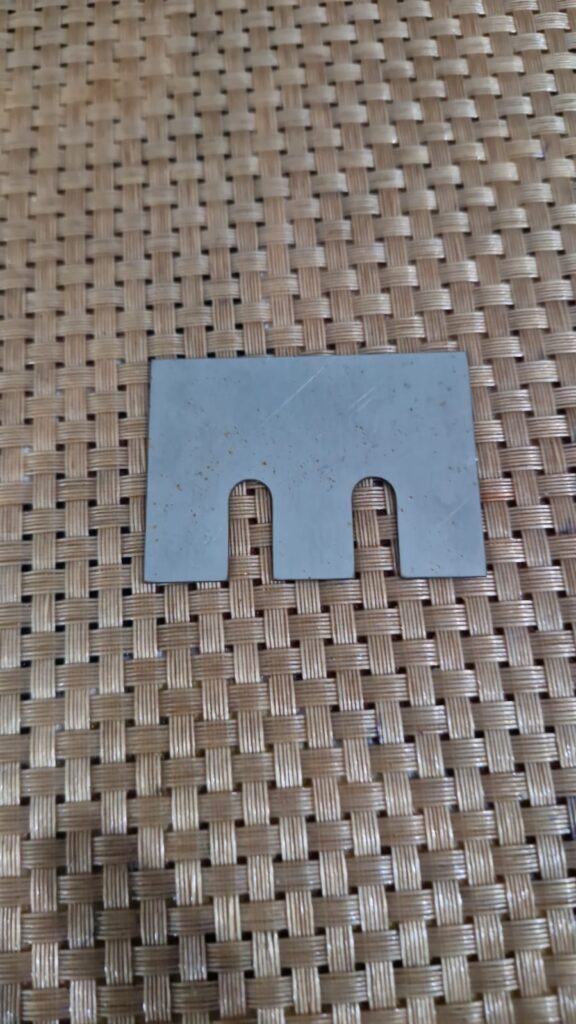
We started with a standard extrusion setup and adjusted the 3 mm die by reducing the number of holes. While pellet size and uniformity were good, the major issue remained:
Pellets were sinking instead of floating.
We quickly realized that simply controlling pellet size is not enough — floatability depends heavily on:
- Die hole configuration
- Pressure build-up inside the barrel
- Moisture absorption
- Density control
Too many die holes reduced pressure buildup, resulting in insufficient expansion and sinking pellets. Each pellet size (0.8 mm, 1 mm, 2 mm, 3 mm) requires a different die configuration.
2️⃣ Understanding Density & Floatability
Our investigation focused on the relationship between bulk density and floating behavior.
Bulk density = weight (grams) contained in 1 liter of feed.
Typical values:
- Floating pellets: 450–550 g/dm³
- Sinking pellets: above 550–600 g/dm³
During our trials, the feed density measured:
557 g/dm³ — slightly above the floating threshold.
This explained why pellets appeared good visually but still sank in water.
3️⃣ Moisture Trials — Finding the Right Balance
To solve the issue, we conducted multiple R&D trials using different moisture levels in the flour/dough:
- 30%
- 32%
- 34%
- 37%
- 40%
- 45%
These experiments were performed with:
- 3 mm die configuration
- Barrel Zone 3 = 120 °C
- Barrel Zone 4 = 150 °C
- Adjusted screw speeds between trials
The key learning:
There is no single fixed moisture percentage — it depends on formulation, process setup, and final product target.
4️⃣ Initial Formulation Used
Our starting feed formulation included:
- Corn flour
- Wheat flour
- Soy
- Silkworm meal
- Shrimp meal
- Fish meal
- Bran
- Oilseed cake
- Rice DDGS
Each ingredient influences starch behavior, protein interaction, and expansion characteristics.
5️⃣ The Most Important Lesson — Moisture Absorption
Moisture percentage alone does not guarantee success.
The critical factor is:
Whether starch granules actually absorb the water.
If water is:
- Added too late
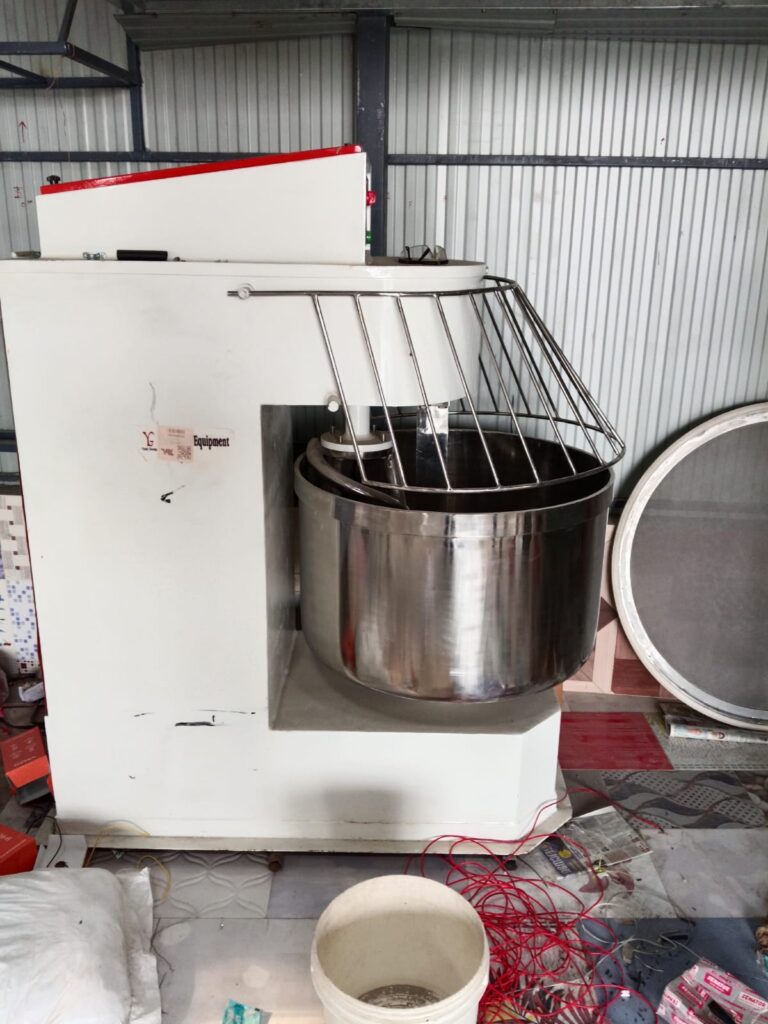
- Poorly mixed
- Insufficiently absorbed
Then:
- Starch remains crystalline
- Gelatinization becomes incomplete
- Expansion decreases
- Pellets become dense and sink
We used a halogen-based moisture analyzer (≈ $1000+) to accurately measure moisture before extrusion.
6️⃣ What Gelatinization Really Means
In twin-screw extrusion, gelatinization occurs when starch granules:
- Absorb water
- Swell
- Break structure
- Become digestible
This happens only when three elements work together:
Water (moisture)
Heat
Shear energy (from screw action)
Without proper moisture absorption, heat alone cannot cook the feed properly.
7️⃣ How Moisture Changes Product Behavior
~30–32% Moisture
- High shear
- Strong expansion
- Ideal for floating feed
- Risk of overload or burning
~34–36% Moisture
- Balanced cooking
- Stable extrusion
- Good gelatinization
- Most stable operating window
~38–40% Moisture
- Reduced expansion
- Softer melt
- Semi-floating applications
~45% Moisture
- Very low shear
- Minimal expansion
- Used for specialized products
8️⃣ Why “Absorption” Matters More Than Moisture %
Two plants may run at the same moisture level but achieve different results depending on:
| Process Factor | Result |
| Early water injection | Better gelatinization |
| Proper preconditioning | Improved cooking |
| Longer residence time | Better expansion |
| Poor mixing | Undercooked product |
Same moisture % does not guarantee the same outcome.
9️⃣ Practical Operator Checks
Signs of good gelatinization:
Glossy plastic dough
Uniform expansion
Strong floating ability
No raw flour smell
Signs of poor gelatinization:
Powdery melt
Pellet cracking
Hard core
Excess fines after drying
Process Equipment Adjustments
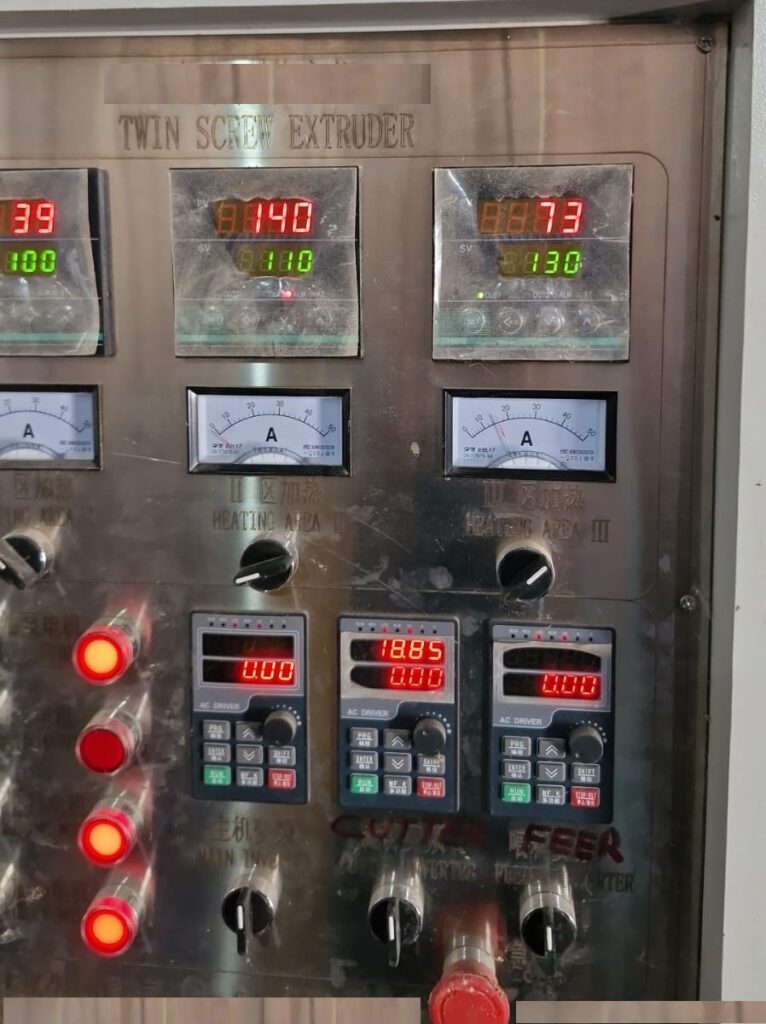
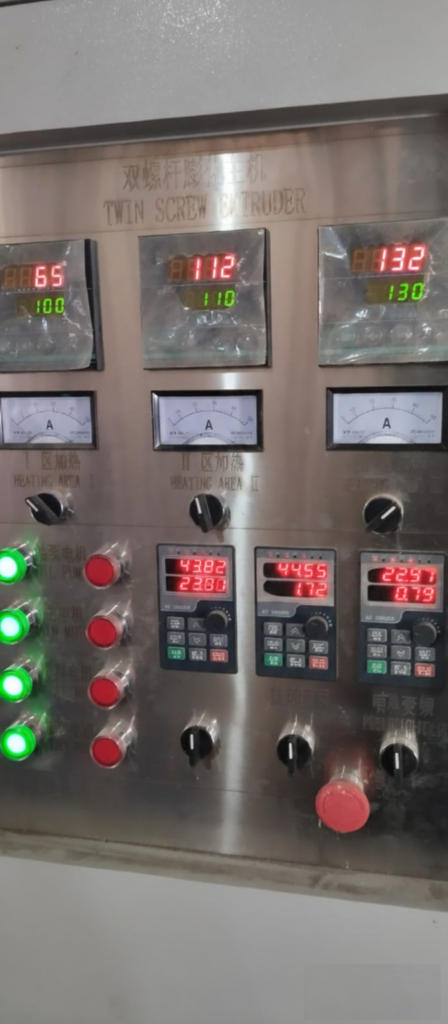
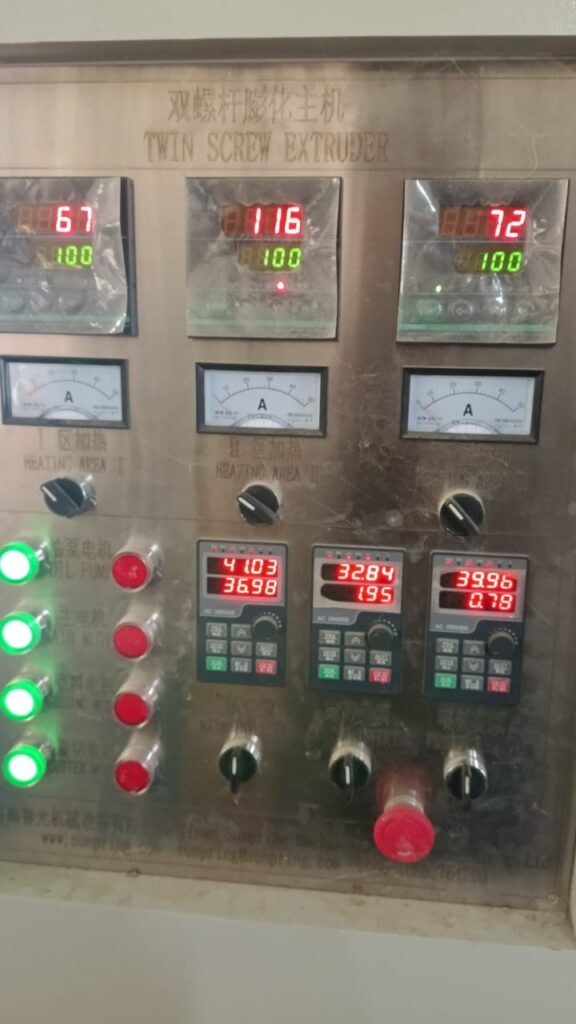
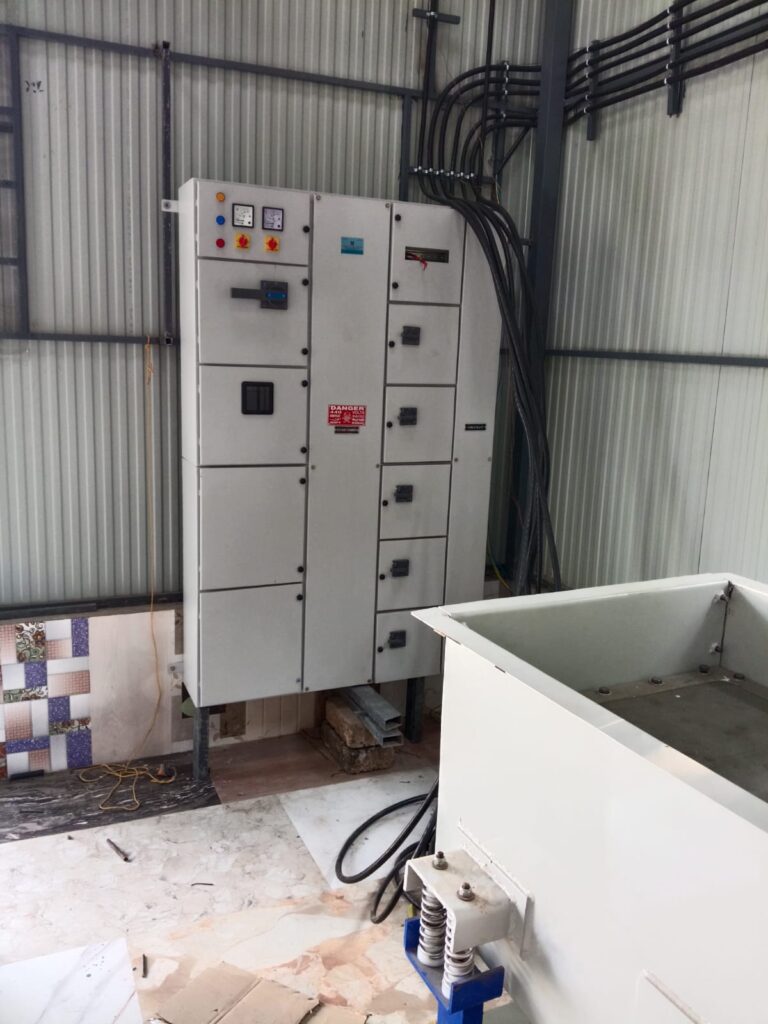
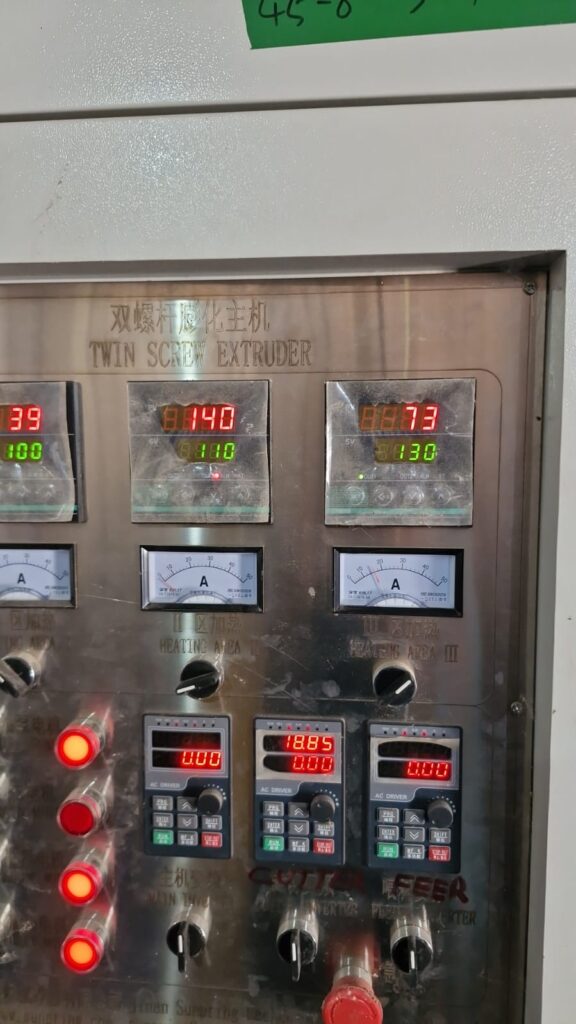
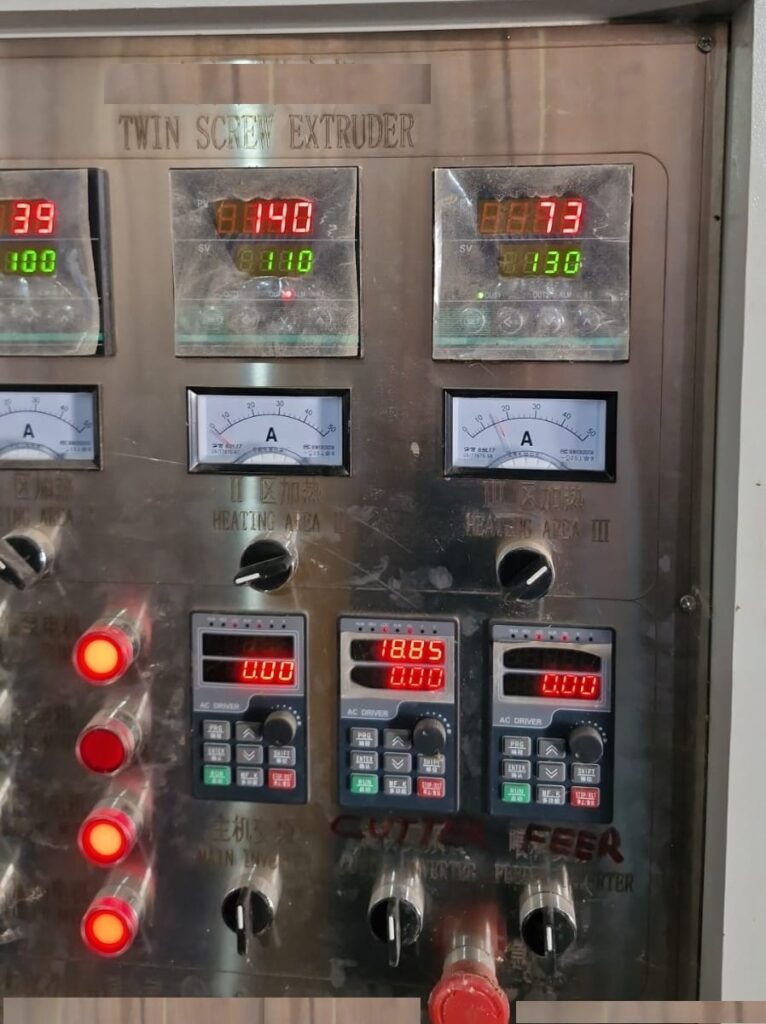
Once moisture was optimized, we adjusted parameters using the VFD (Variable Frequency Drive) and control panel of the twin-screw extruder.
Barrel Heating Zones
PID temperature controllers regulate barrel heating:
- PV = Actual temperature
- SV = Set temperature
These zones directly influence cooking and gelatinization.
Ammeter Monitoring
Analog meters track motor or heater current:
- Detect overload
- Monitor stability
- Prevent equipment failure
VFD Speed Controllers
VFDs control motor frequency and RPM:
- Main screw speed → affects shear and cooking
- Cutter speed → controls pellet length
- Feeder speed → controls feed rate
Fine adjustments were made using rotary knobs to stabilize product density and expansion.
1️⃣1️⃣ Unexpected Problem Discovered
During troubleshooting we found:
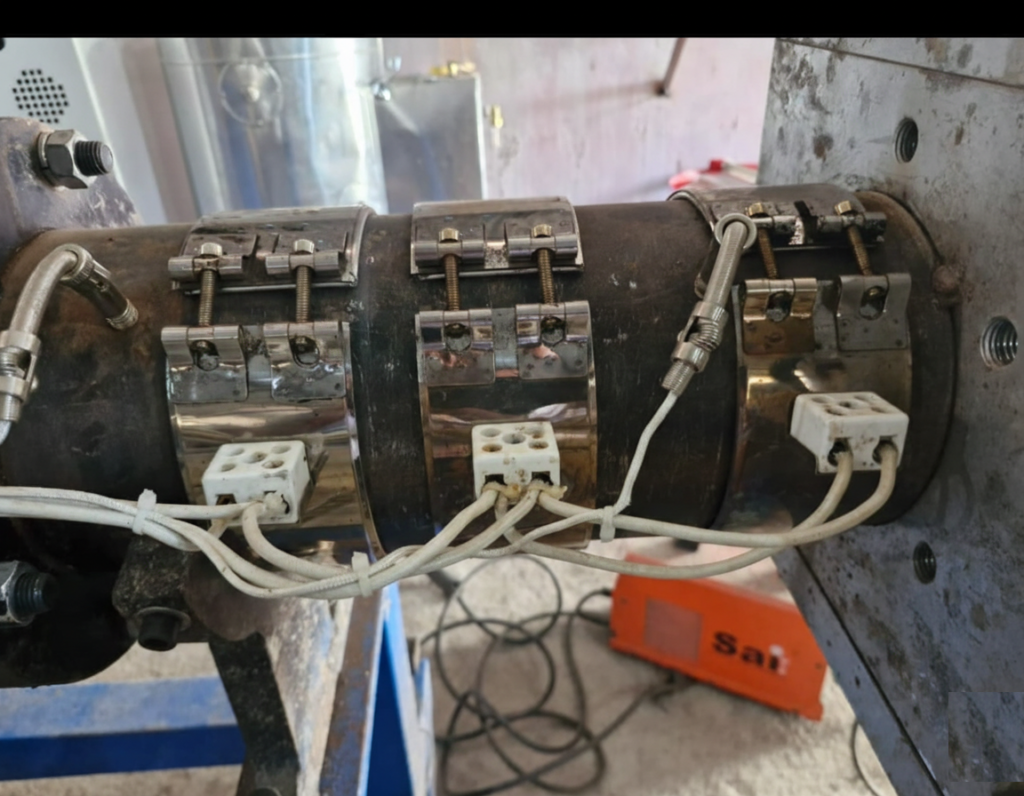
Heater sensor installation was incorrect in Zone 3 & Zone 4.
This caused unstable heating and process inconsistency. Once corrected, extrusion performance improved significantly.
Final Outcome
After optimizing:
- Die hole configuration
- Moisture absorption
- Temperature zoning
- Screw speed
- Feed rate
We achieved:
Stable extrusion process
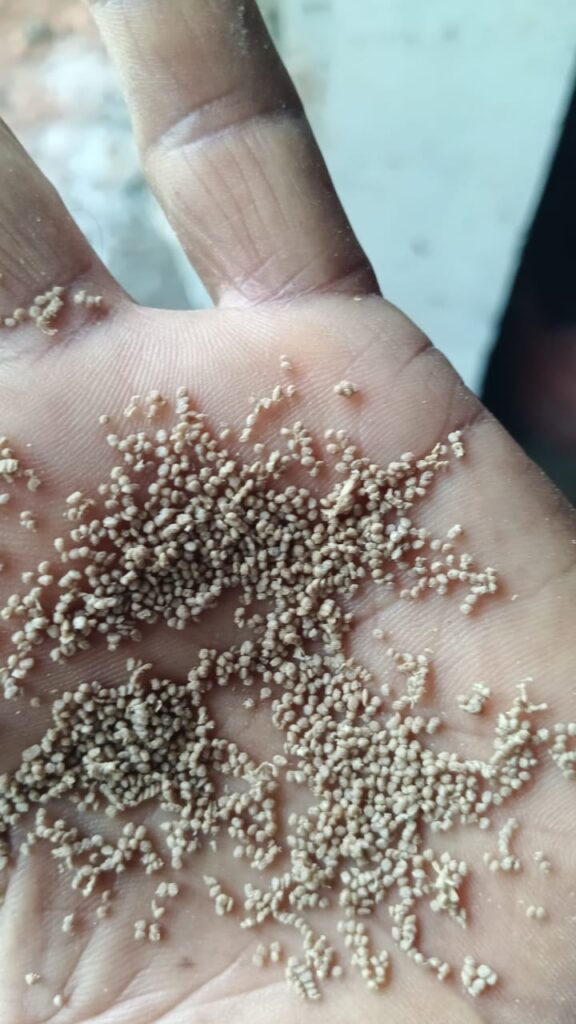
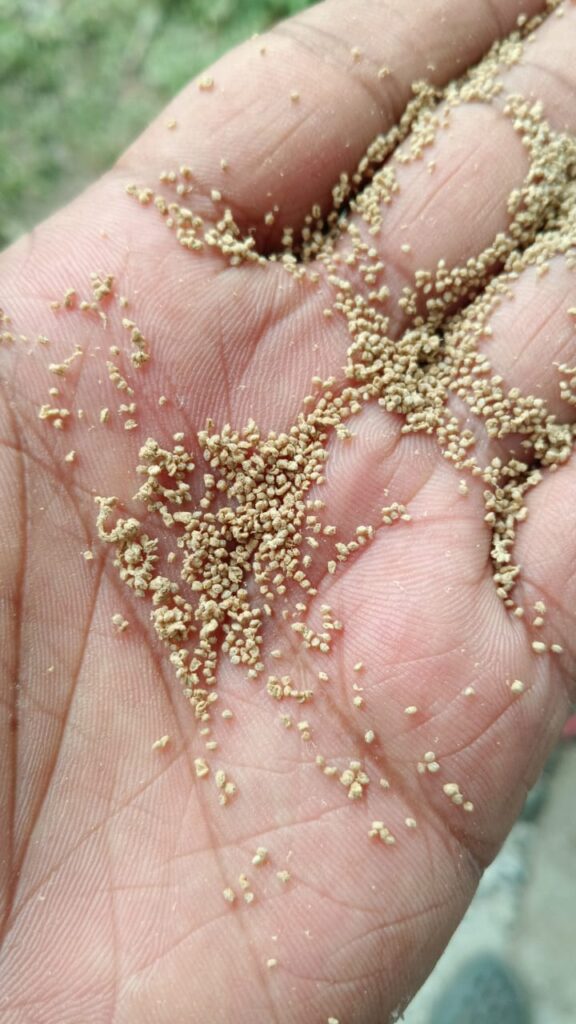
Uniform 3 mm pellets
Excellent pigmentation
Proper expansion
Reliable floatability
Key Takeaway
Floating fish feed does not depend only on how much water is added — it depends on how much water the starch actually absorbs before exiting the die.
Mastering this principle transformed our product from sinking pellets into high-quality floating feed.