How We Produced 3 mm Floating Fish Feed Through Extrusion with excellent pigmentation for fish— A Practical R&D Story
Producing a perfectly floating fish feed pellet using twin-screw extruder may look simple from the outside — but in reality, it requires careful control of density, moisture, temperature, and mechanical energy inside the extruder.
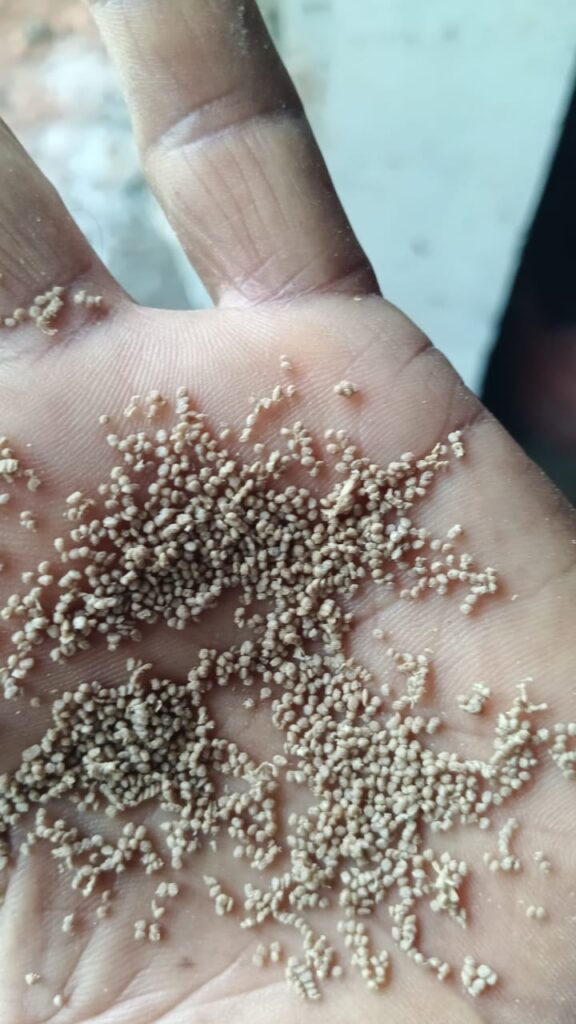
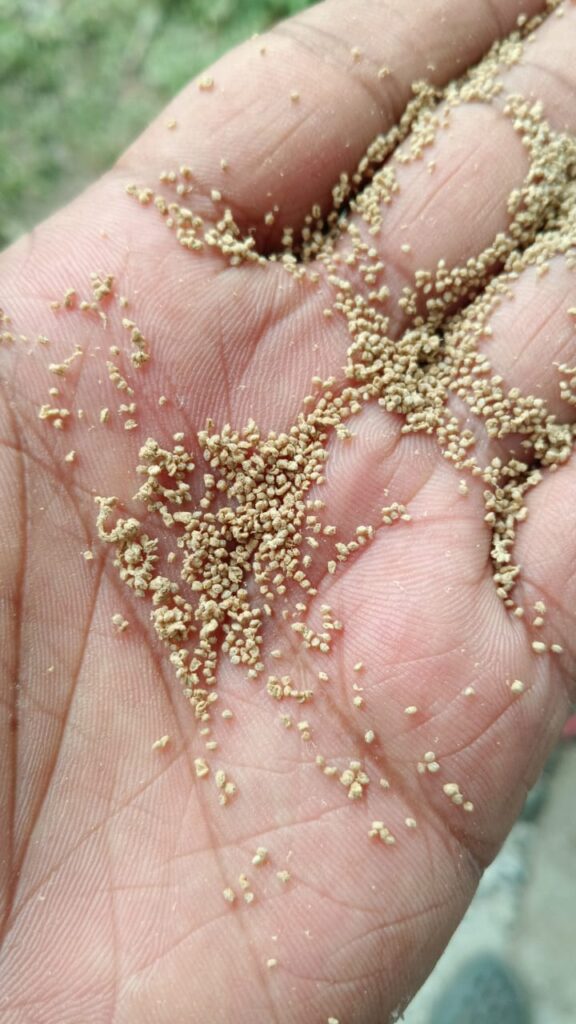
This is the story of how we successfully produced 3 mm floating fish feed with excellent pigmentation, after several trials and process adjustments.
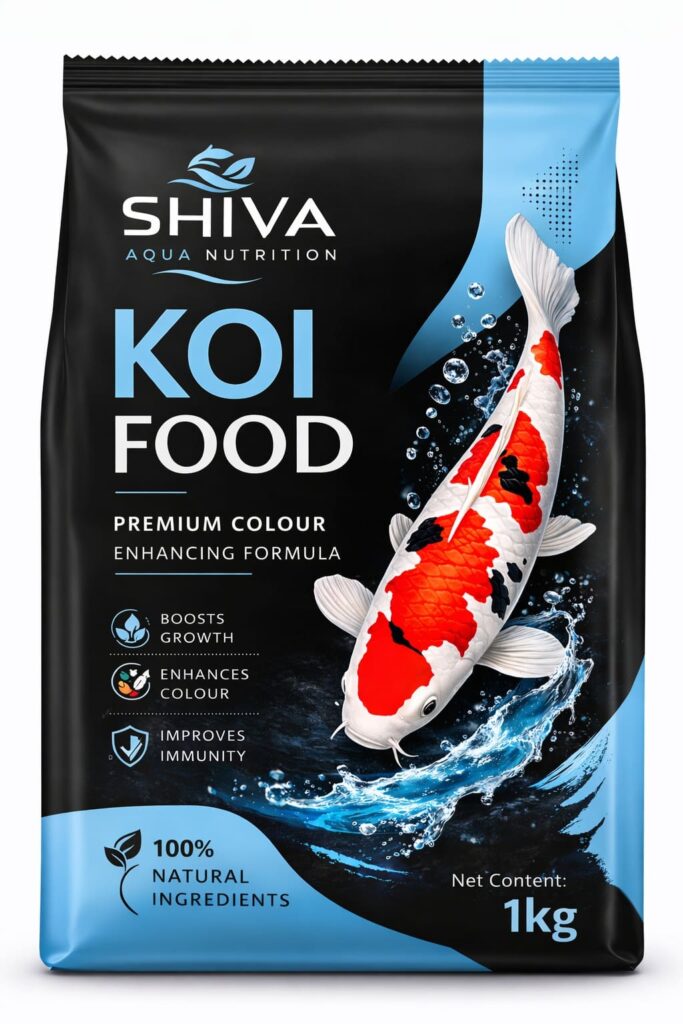
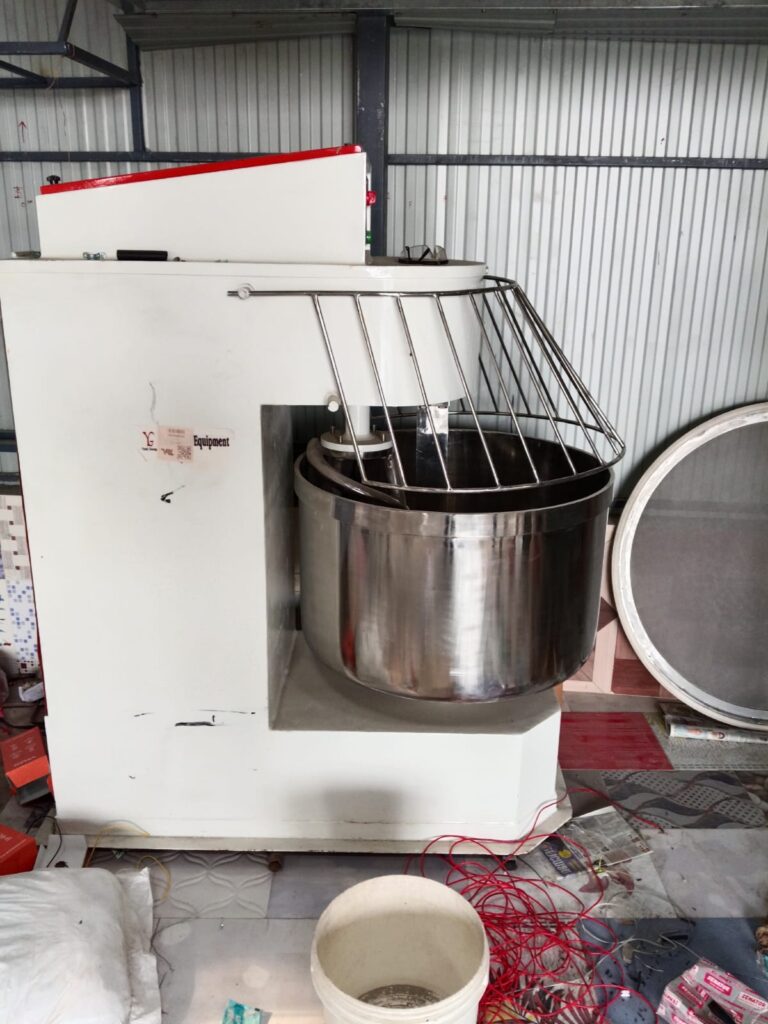
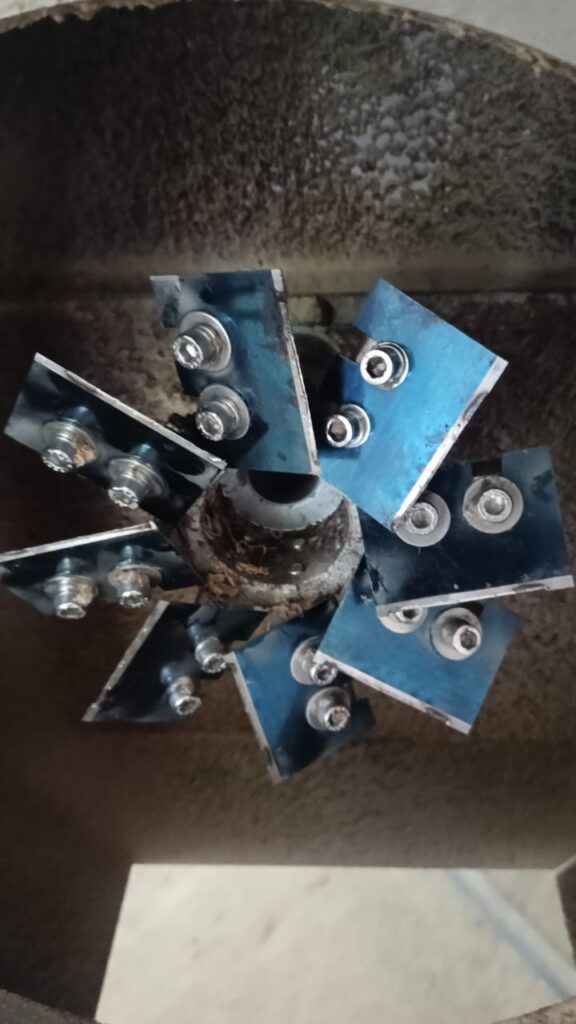
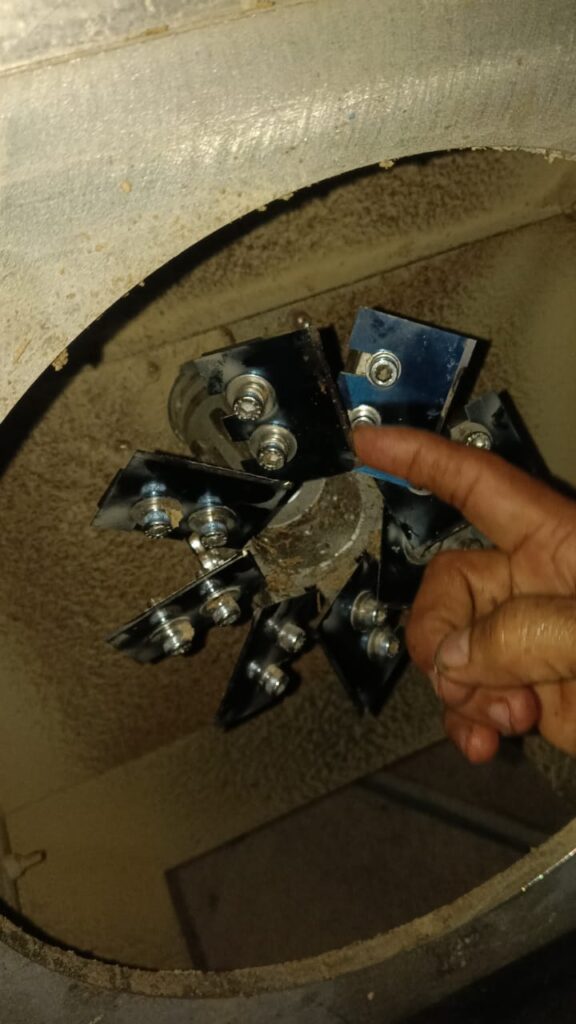
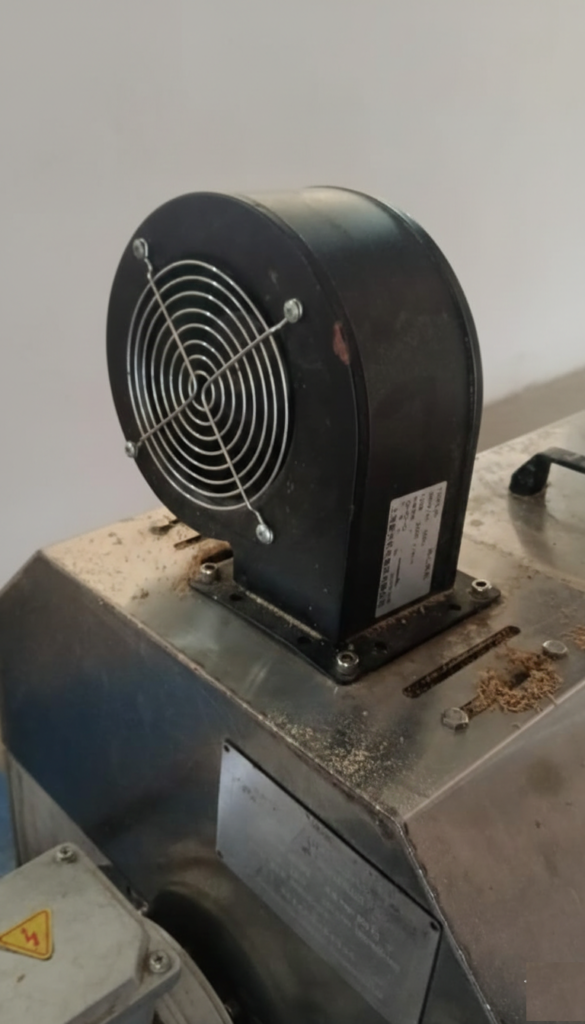
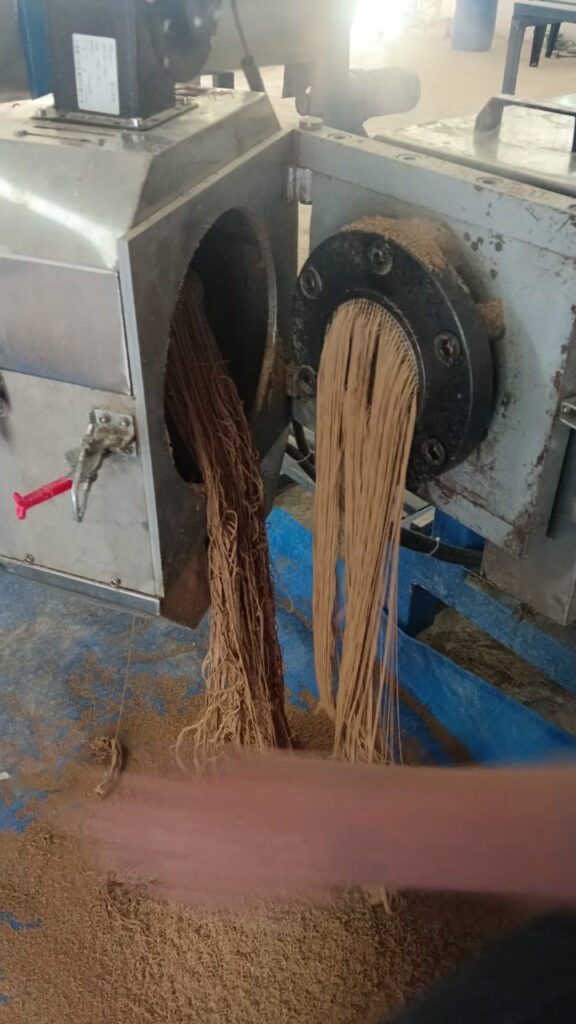
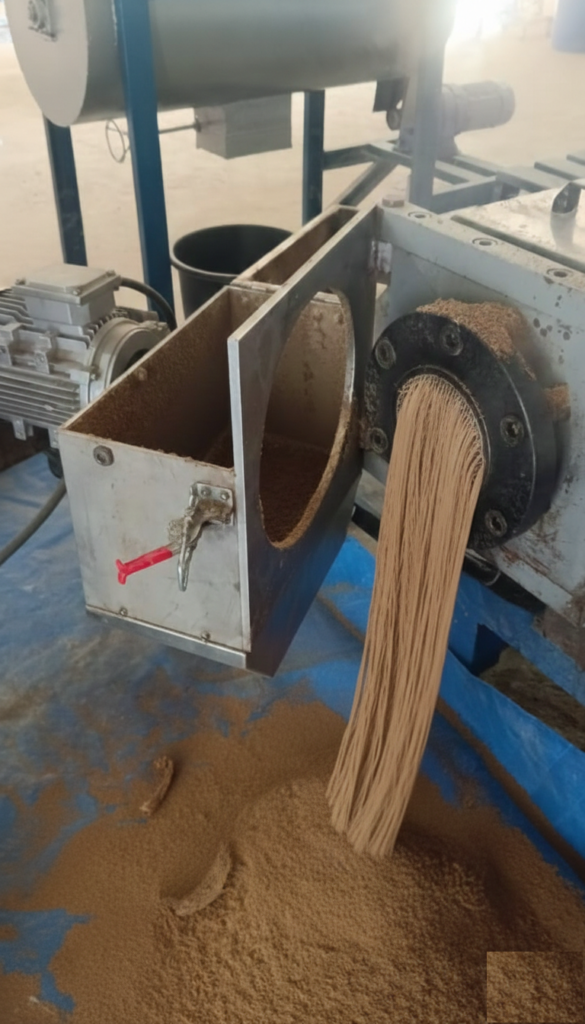
Twin Screw Extruder
1️⃣ The Initial Challenge
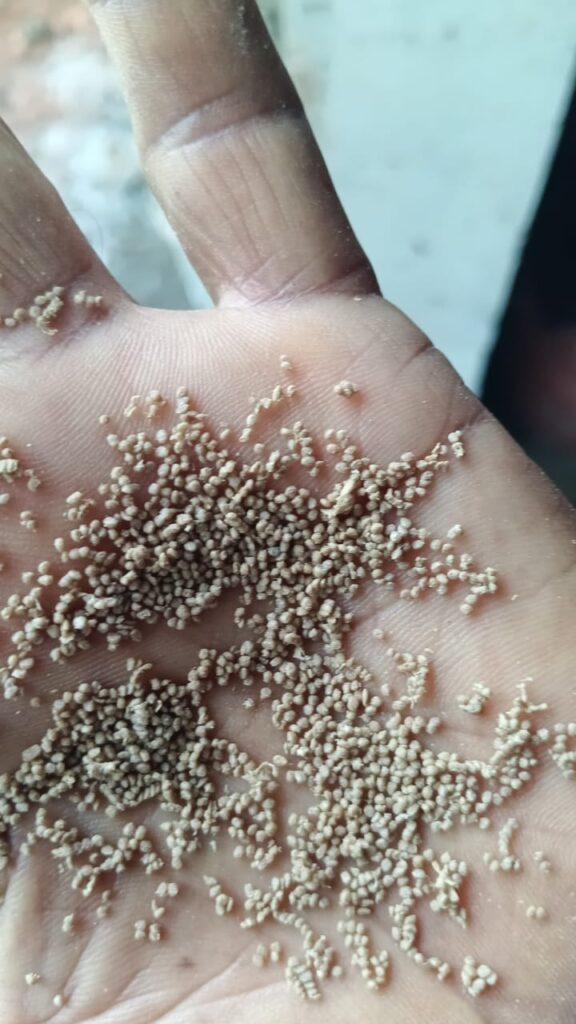
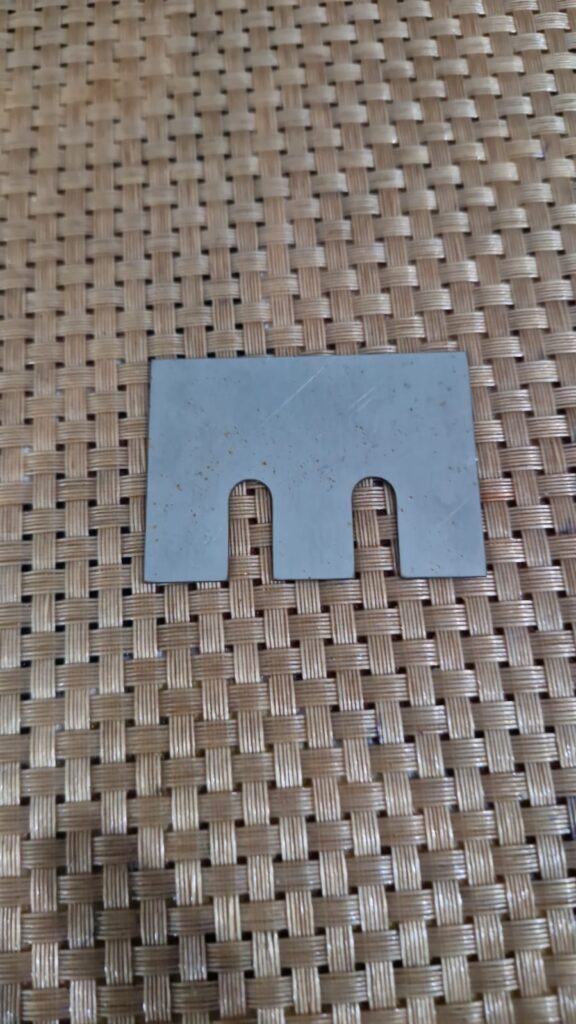
We started with a standard extrusion setup and adjusted the 3 mm die by reducing the number of holes. While pellet size and uniformity were good, the major issue remained:
➡️ Pellets were sinking instead of floating.
We quickly realized that simply controlling pellet size is not enough — floatability depends heavily on:
- Die hole configuration
- Pressure build-up inside the barrel
- Moisture absorption
- Density control
Too many die holes reduced pressure buildup, resulting in insufficient expansion and sinking pellets. Each pellet size (0.8 mm, 1 mm, 2 mm, 3 mm) requires a different die configuration.
2️⃣ Understanding Density & Floatability
Our investigation focused on the relationship between bulk density and floating behavior.
Bulk density = weight (grams) contained in 1 liter of feed.
Typical values:
- Floating pellets: 450–550 g/dm³
- Sinking pellets: above 550–600 g/dm³
During our trials, the feed density measured:
➡️ 557 g/dm³ — slightly above the floating threshold.
This explained why pellets appeared good visually but still sank in water.
3️⃣ Moisture Trials — Finding the Right Balance
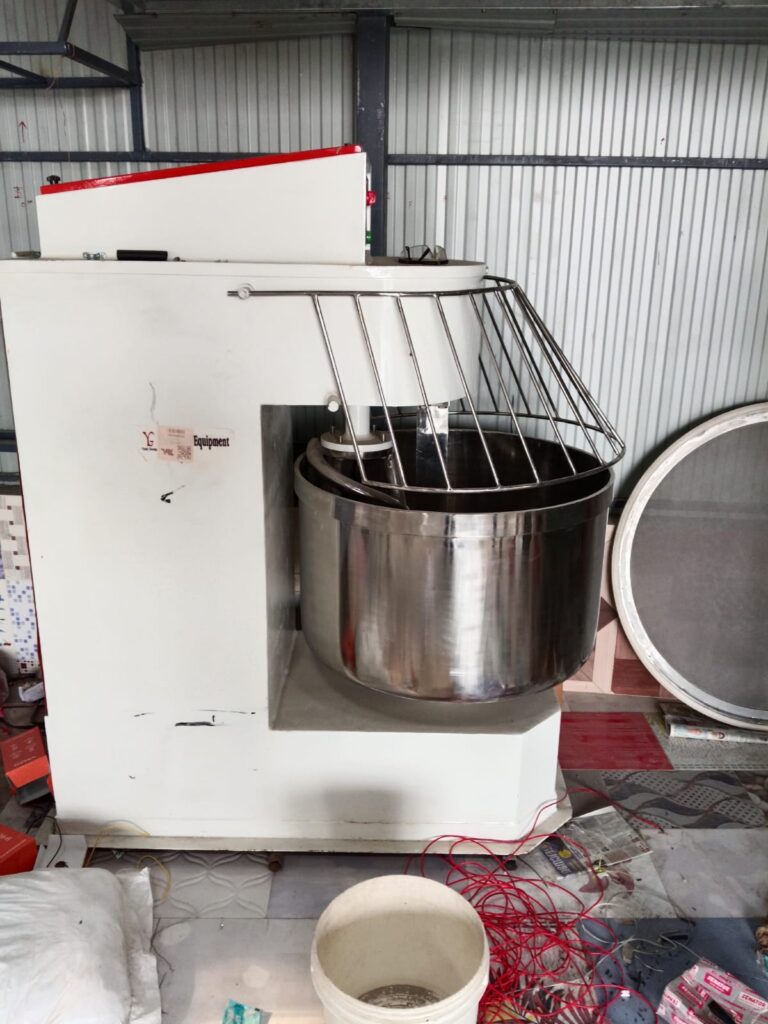
To solve the issue, we conducted multiple R&D trials using different moisture levels in the flour/dough:
- 30%
- 32%
- 34%
- 37%
- 40%
- 45%
These experiments were performed with:
- 3 mm die configuration
- Barrel Zone 3 = 120 °C
- Barrel Zone 4 = 150 °C
- Adjusted screw speeds between trials
The key learning:
There is no single fixed moisture percentage — it depends on formulation, process setup, and final product target.
4️⃣ Initial Formulation Used
Our starting feed formulation included:
- Corn flour
- Wheat flour
- Soy
- Silkworm meal
- Shrimp meal
- Fish meal
- Bran
- Oilseed cake
- Rice DDGS
Each ingredient influences starch behavior, protein interaction, and expansion characteristics.
5️⃣ The Most Important Lesson — Moisture Absorption
Moisture percentage alone does not guarantee success.
The critical factor is:
➡️ Whether starch granules actually absorb the water.
If water is:
- Added too late
- Poorly mixed
- Insufficiently absorbed
Then:
- Starch remains crystalline
- Gelatinization becomes incomplete
- Expansion decreases
- Pellets become dense and sink
We used a halogen-based moisture analyzer (≈ $1000+) to accurately measure moisture before extrusion.
6️⃣ What Gelatinization Really Means
In twin-screw extrusion, gelatinization occurs when starch granules:
- Absorb water
- Swell
- Break structure
- Become digestible
This happens only when three elements work together:
✔️ Water (moisture)
✔️ Heat
✔️ Shear energy (from screw action)
Without proper moisture absorption, heat alone cannot cook the feed properly.
7️⃣ How Moisture Changes Product Behavior
~30–32% Moisture
- High shear
- Strong expansion
- Ideal for floating feed
- Risk of overload or burning
~34–36% Moisture
- Balanced cooking
- Stable extrusion
- Good gelatinization
- Most stable operating window
~38–40% Moisture
- Reduced expansion
- Softer melt
- Semi-floating applications
~45% Moisture
- Very low shear
- Minimal expansion
- Used for specialized products
8️⃣ Why “Absorption” Matters More Than Moisture %
Two plants may run at the same moisture level but achieve different results depending on:
| Process Factor | Result |
| Early water injection | Better gelatinization |
| Proper preconditioning | Improved cooking |
| Longer residence time | Better expansion |
| Poor mixing | Undercooked product |
➡️ Same moisture % does not guarantee the same outcome.
9️⃣ Practical Operator Checks
Signs of good gelatinization:
✔️ Glossy plastic dough
✔️ Uniform expansion
✔️ Strong floating ability
✔️ No raw flour smell
Signs of poor gelatinization:
❌ Powdery melt
❌ Pellet cracking
❌ Hard core
❌ Excess fines after drying
🔟 Process Equipment Adjustments
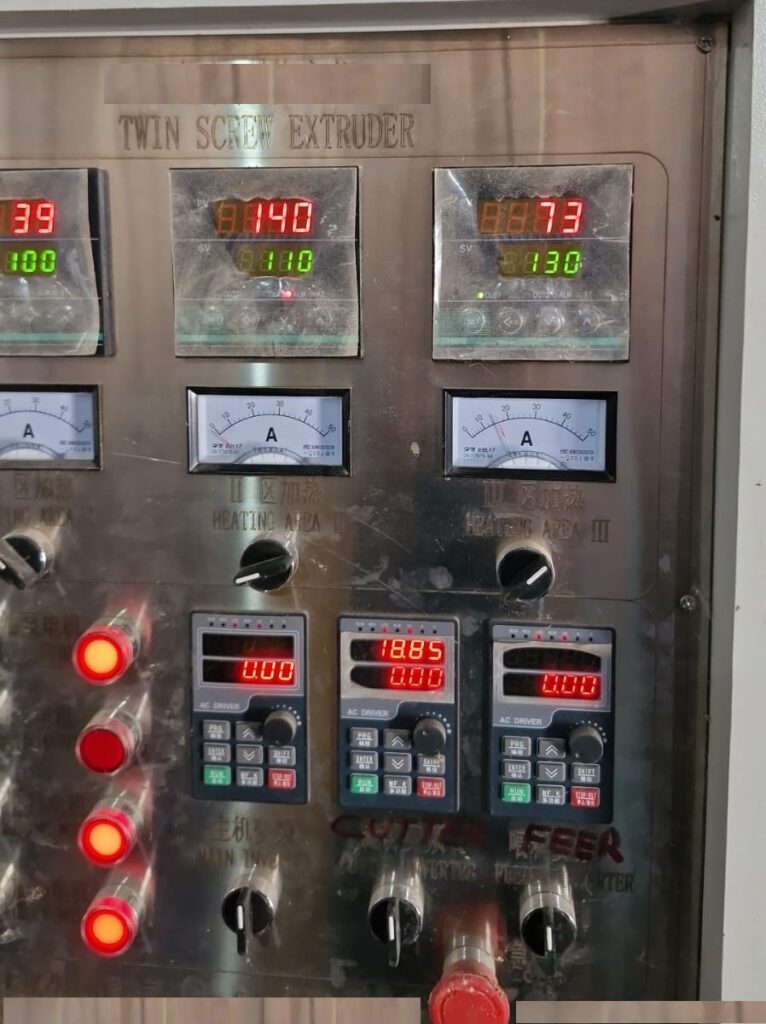
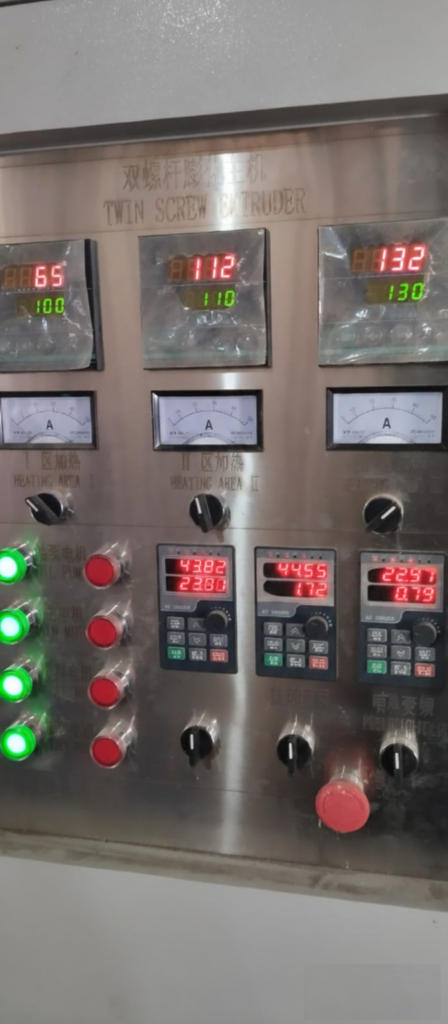
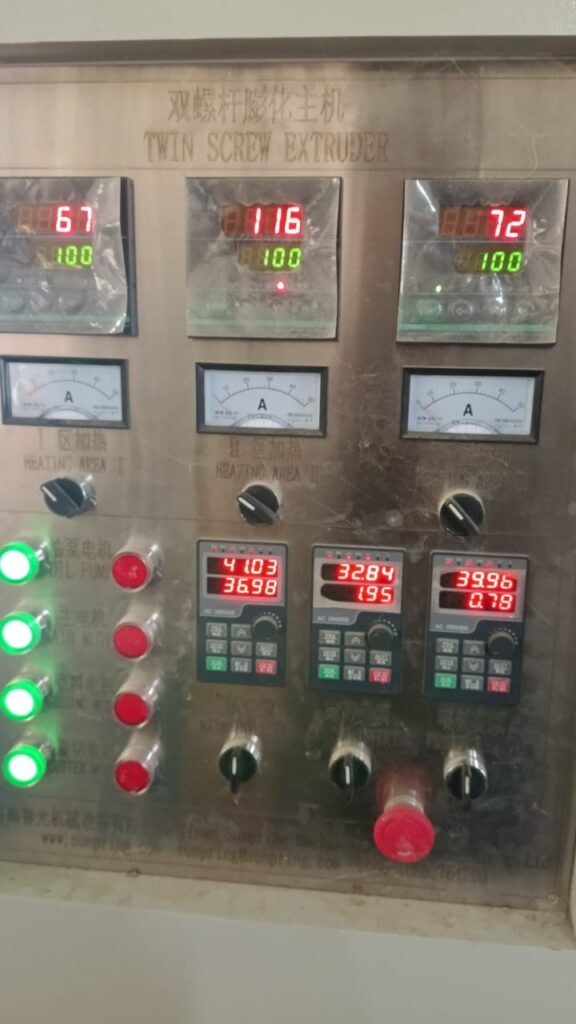
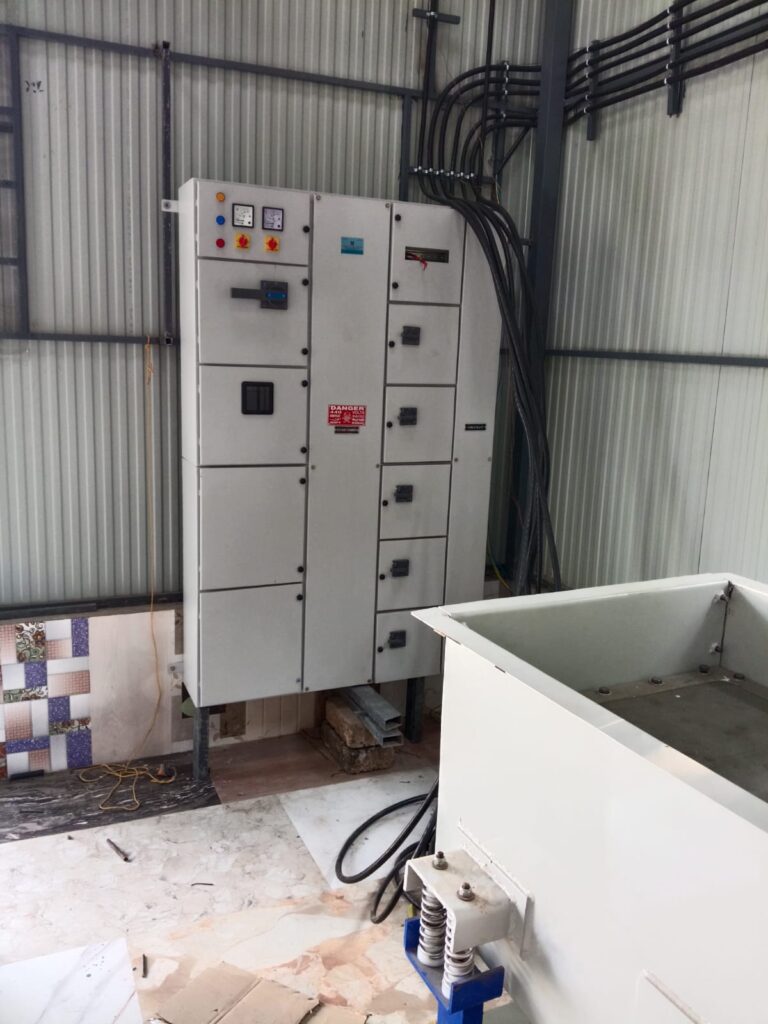
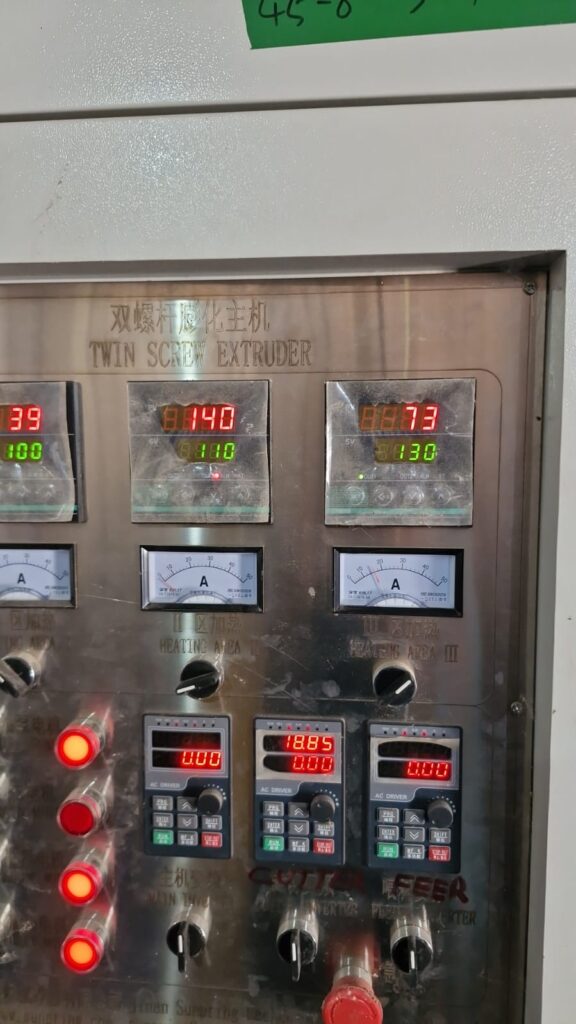
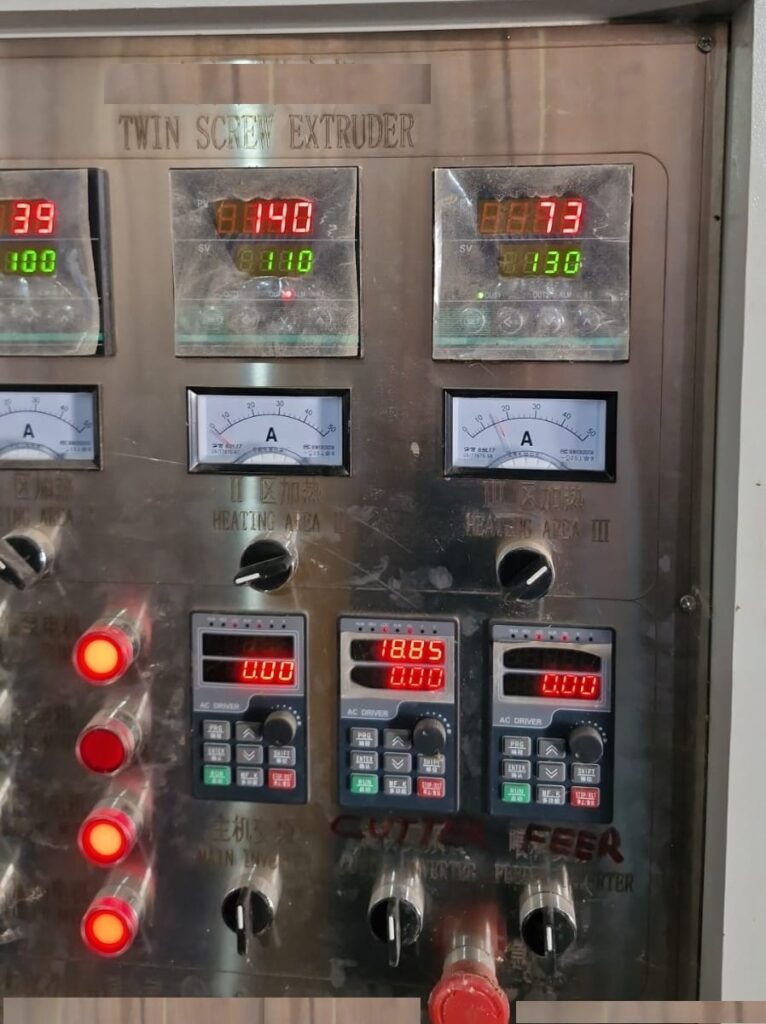
Once moisture was optimized, we adjusted parameters using the VFD (Variable Frequency Drive) and control panel of the twin-screw extruder.
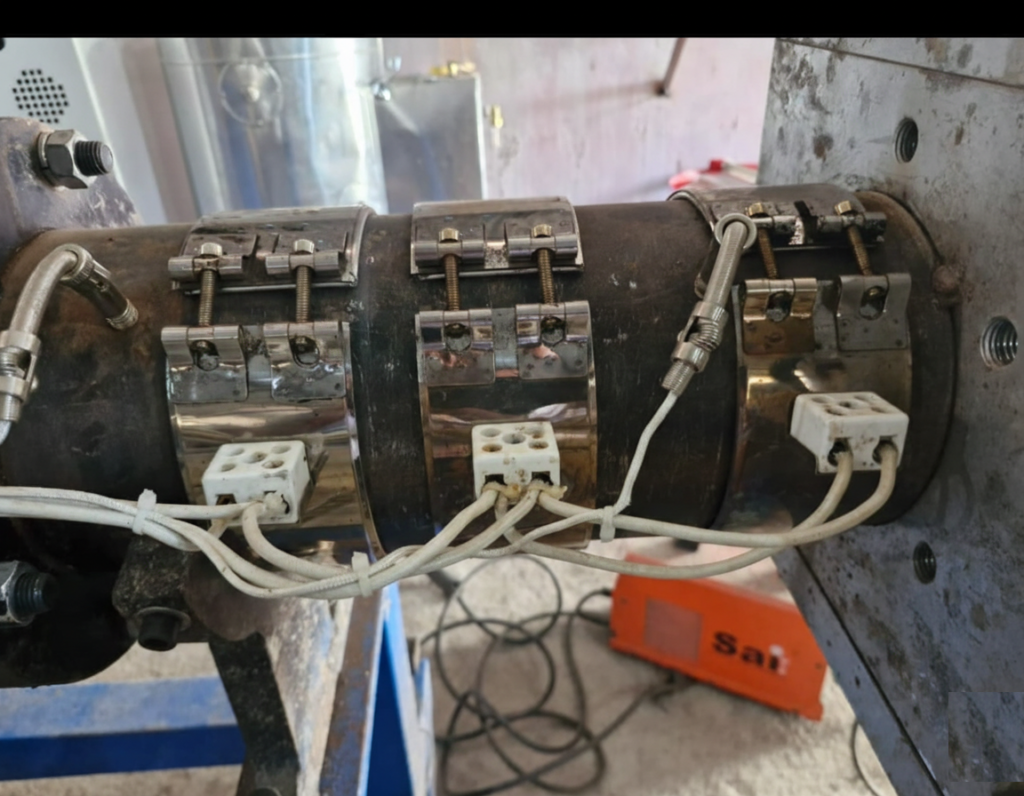
Barrel Heating Zones
PID temperature controllers regulate barrel heating:
- PV = Actual temperature
- SV = Set temperature
These zones directly influence cooking and gelatinization.
Ammeter Monitoring
Analog meters track motor or heater current:
- Detect overload
- Monitor stability
- Prevent equipment failure
VFD Speed Controllers
VFDs control motor frequency and RPM:
- Main screw speed → affects shear and cooking
- Cutter speed → controls pellet length
- Feeder speed → controls feed rate
Fine adjustments were made using rotary knobs to stabilize product density and expansion.
1️⃣1️⃣ Unexpected Problem Discovered
During troubleshooting we found:
➡️ Heater sensor installation was incorrect in Zone 3 & Zone 4.
This caused unstable heating and process inconsistency. Once corrected, extrusion performance improved significantly.
⭐ Final Outcome
After optimizing:
- Die hole configuration
- Moisture absorption
- Temperature zoning
- Screw speed
- Feed rate
We achieved:
✔️ Stable extrusion process
✔️ Uniform 3 mm pellets
✔️ Excellent pigmentation
✔️ Proper expansion
✔️ Reliable floatability
🔑 Key Takeaway
Floating fish feed does not depend only on how much water is added — it depends on how much water the starch actually absorbs before exiting the die.
Mastering this principle transformed our product from sinking pellets into high-quality floating feed.